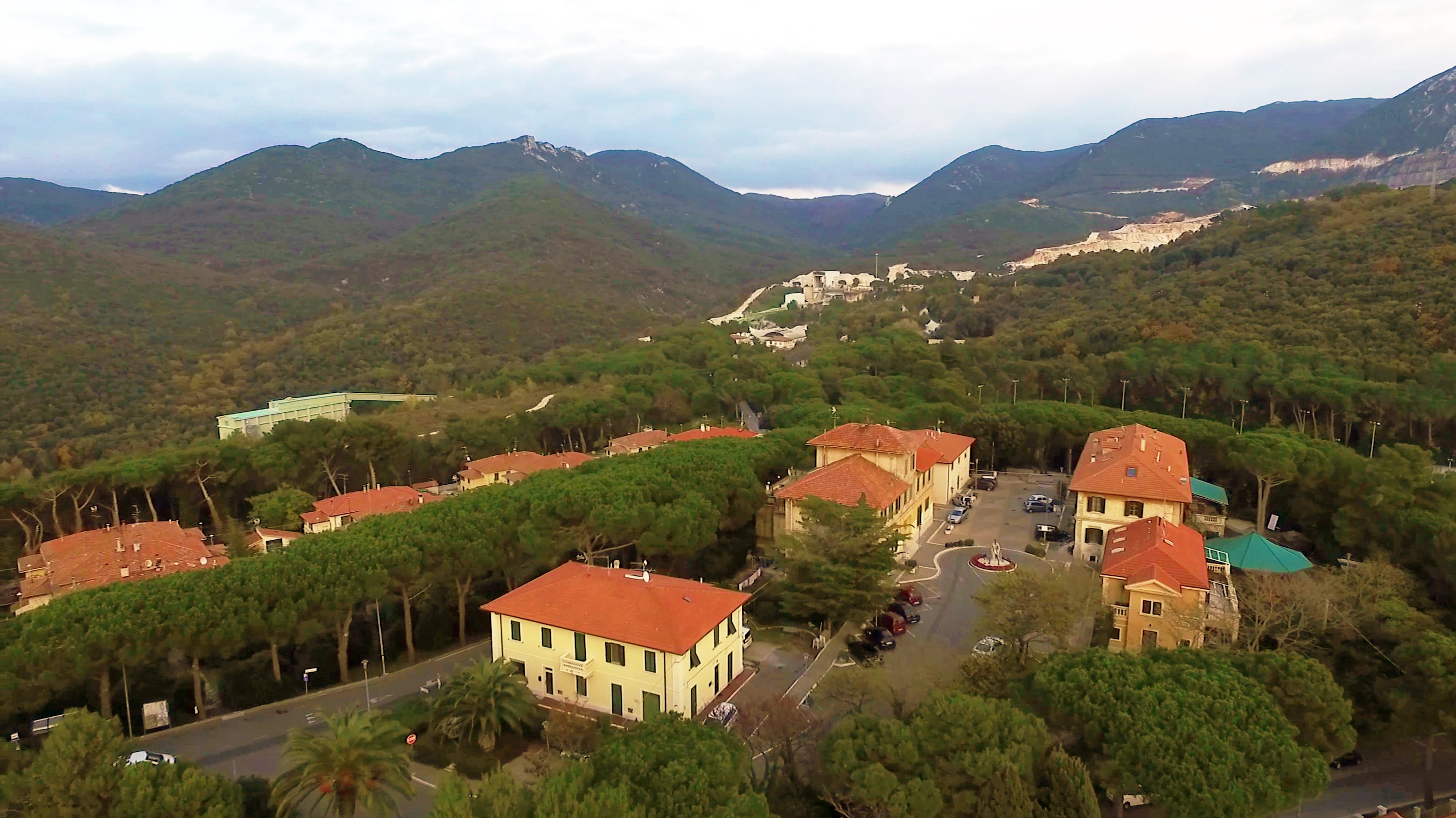

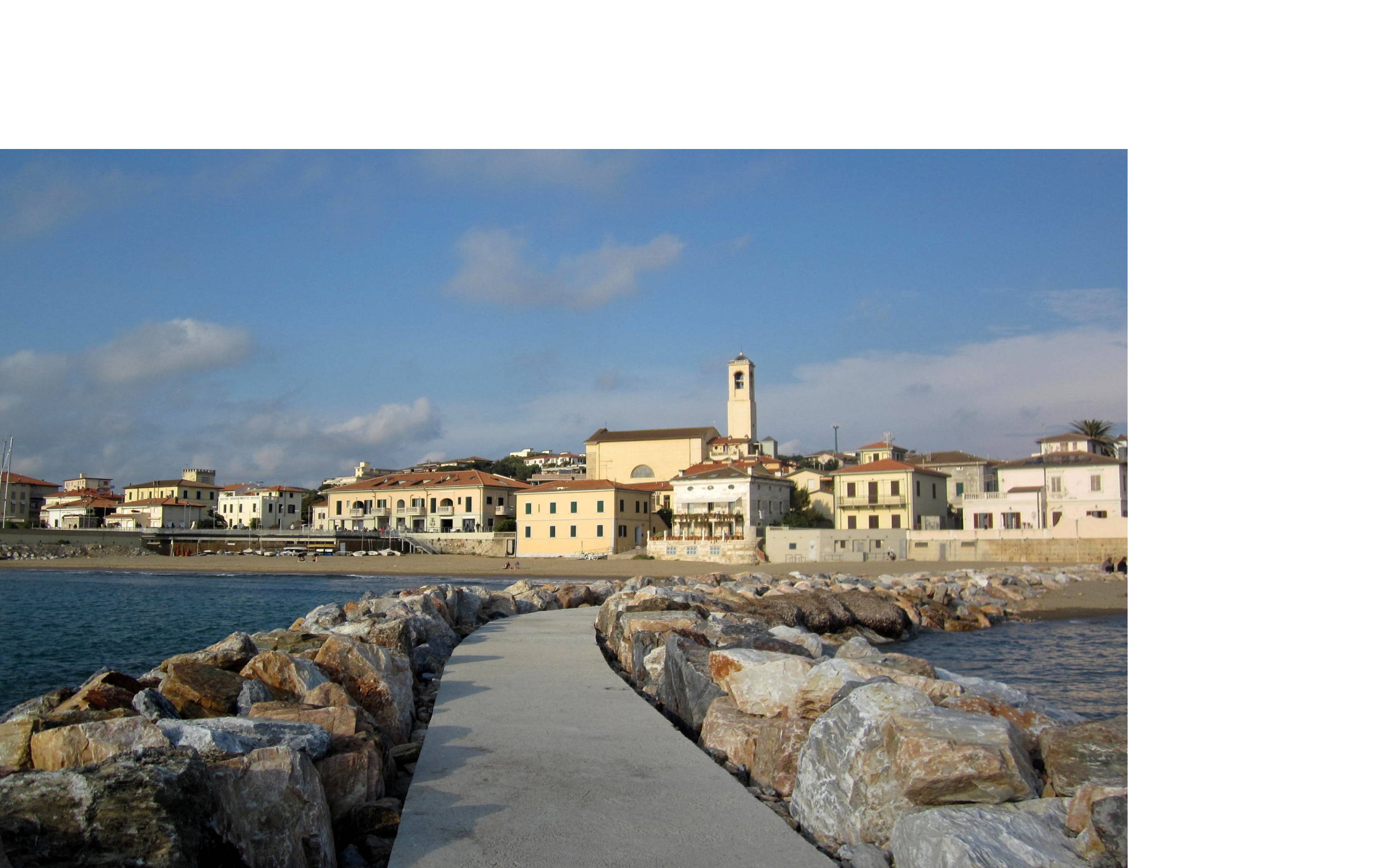
San Carlo is the hill hamlet of San Vincenzo. Distant 5 km from the town center and the sea, it is a small hill hamlet at the foot of Mount Calvi (646 m a.s.l.) and Mount Coronato (553 m a.s.l.). Also surrounded by other hills, it is completely immersed in greenery. Ideal for a relaxing vacation in contact with nature, the hamlet opens up to the surrounding countryside where there are numerous agritourisms. Today the hamlet has about 400 inhabitants and looks like a place out of time, immersed in a landscape and Mediterranean maquis that is still intact. Within the bush there are several nature trails ideal for Trekking and Mountan Bike excursions.
San Carlo is the hill hamlet of San Vincenzo. Distant 5 km from the town center and the sea, it is a small hill hamlet at the foot of Mount Calvi (646 m a.s.l.) and Mount Coronato (553 m a.s.l.). Also surrounded by other hills, it is completely immersed in greenery. Ideal for a relaxing vacation in contact with nature, the hamlet opens up to the surrounding countryside where there are numerous agritourisms. Today the hamlet has about 400 inhabitants and looks like a place out of time, immersed in a landscape and Mediterranean maquis that is still intact. Within the bush there are several nature trails ideal for Trekking and Mountan Bike excursions.
For sports lovers
Through the "Il Corbezzolo trekking trail" from San Carlo it is possible to reach the Rocca di San Silvestro in the municipality of Campiglia M.ma or the charming town of Sassetta and the prestigious medieval village of Castagneto C.cci.
The History of San Carlo
Inhabited since the Paleolithic period, San Carlo was and is home to mineral deposits. Archaeological findings have uncovered a mining village and smelting furnaces dating back to the Bronze Age. Later, on the slopes of Mount Coronato, the Lombard St. Wilfrid (8th cent.) built a fortress called Biserno. The area was abandoned following the destruction of the Biserno ramparts by the army of Pisa in the early 13th century, and the Biserno people moved to the vicinity of the Tower of St. Vincent.
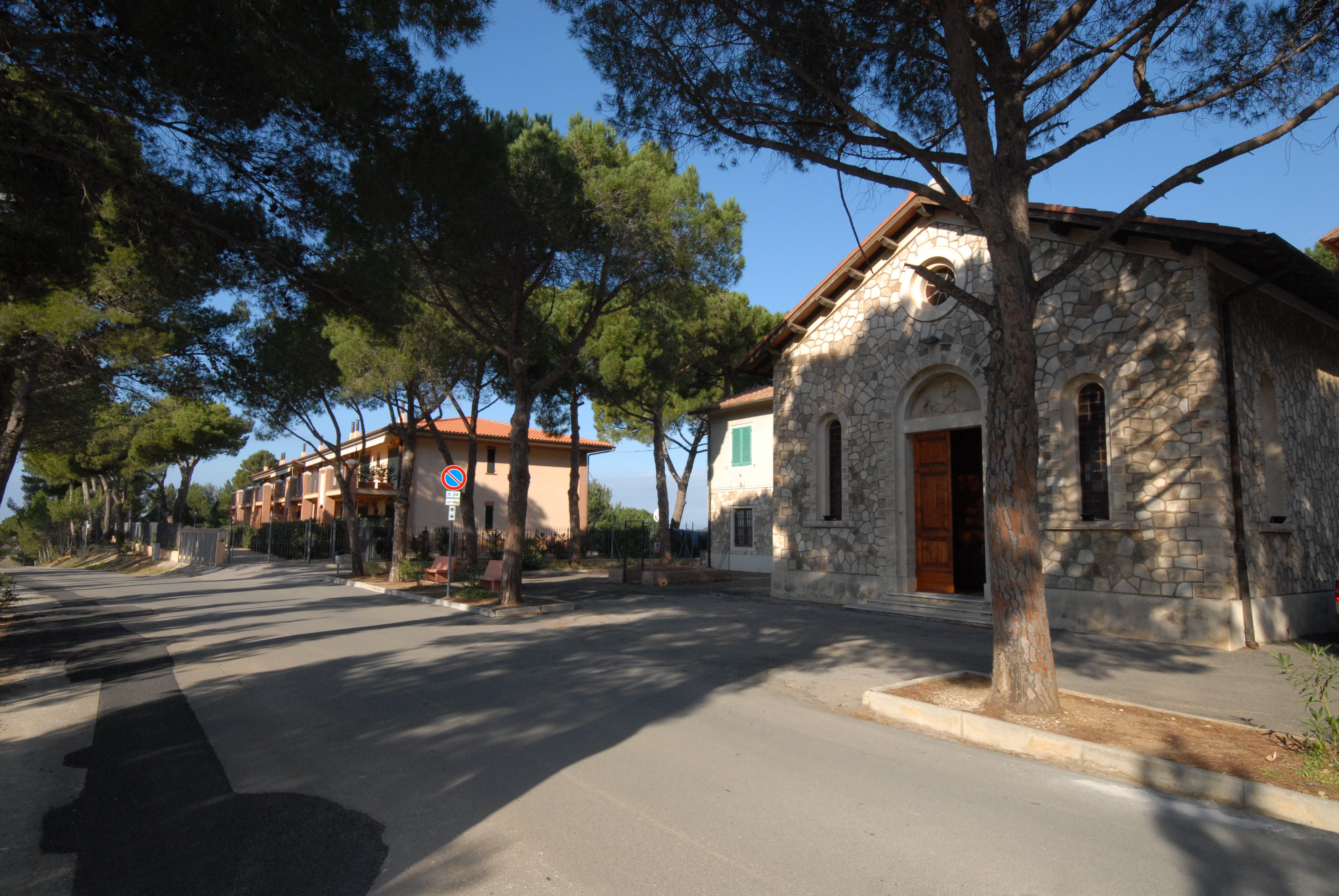
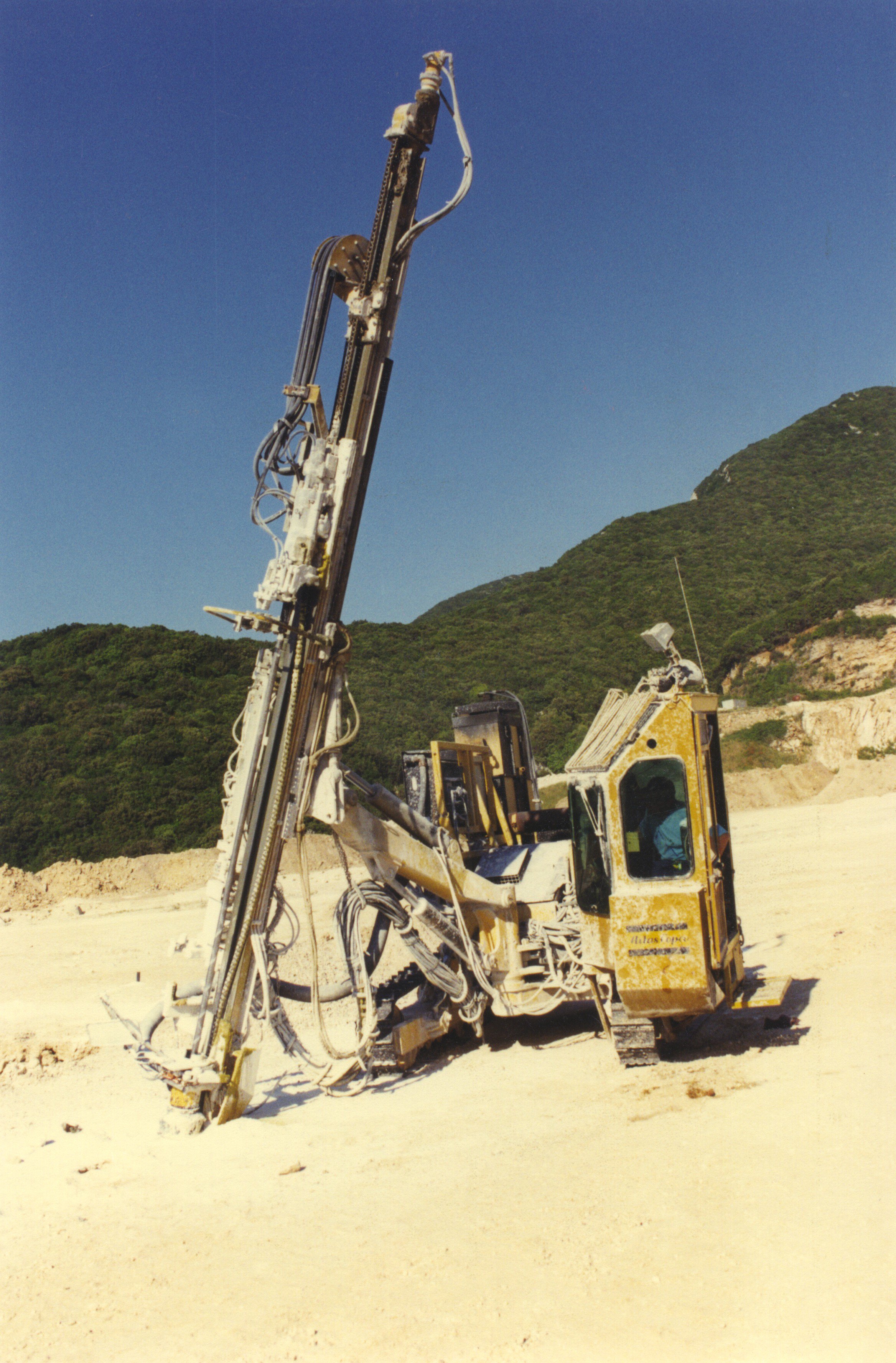
In modern times, more precisely in the year 1872, the Belgian company Solvay began to operate in San Carlo. In addition to limestone mining, the Belgians were responsible for building some houses, a school and a recreation center for their employees. These interventions gave St. Charles its present appearance.
THE SOLVAY SILO.
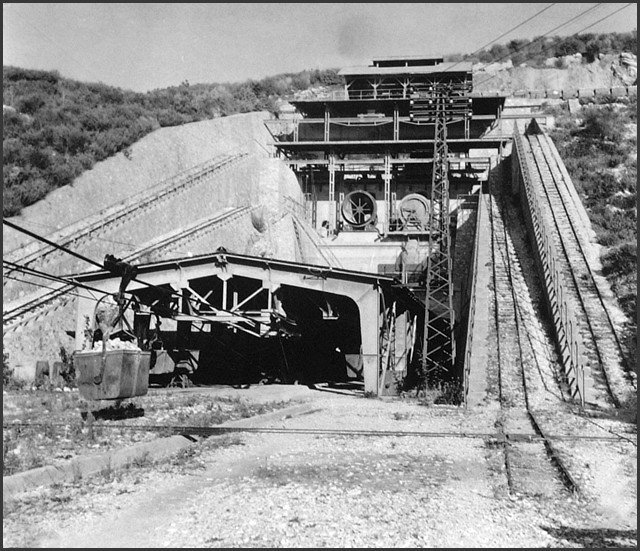
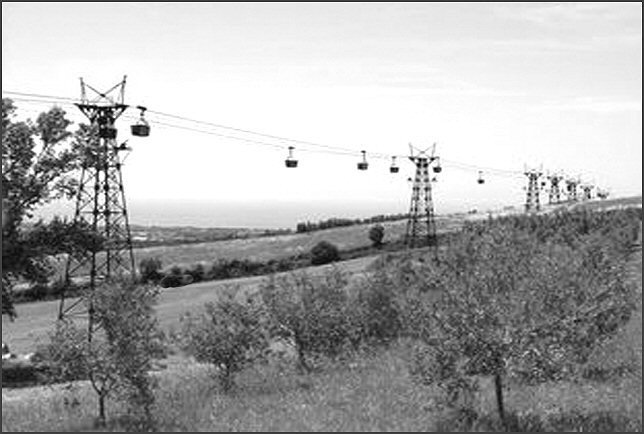
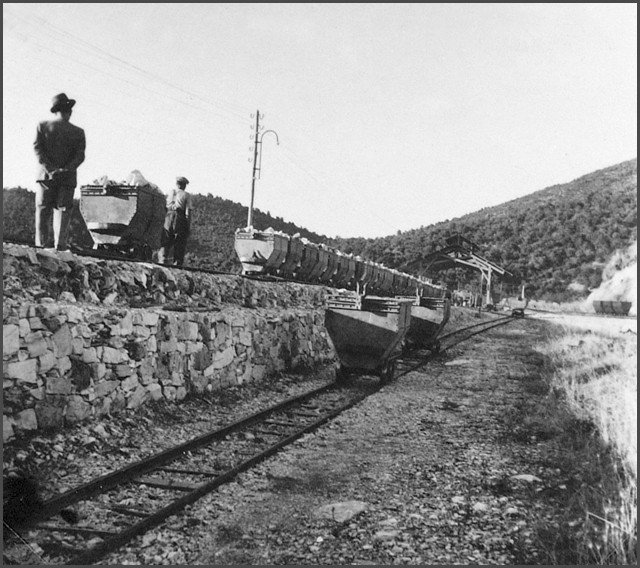
The silo, owned by the Solvay chemical company, was designed, built and expanded between 1928 and 1938 by engineer Pier Luigi Nervi: a structure consisting of a 64-pylon cableway and a continuous line of 250 trolleys to transport the limestone extracted from the San Carlo quarry to the railway. From there, by means of so-called "white trains," the limestone would reach the Rosignano Solvay processing plant to be transformed into soda ash and caustic soda.
Nervi designed the reinforced concrete structure, while the metal complex was built by Ceretti & Tanfani of Milan, authors of Italy's first cable car and the world's first intermediate gantry cable car. The work - 195 meters long, 11 meters wide and 16 meters high - stands out in the center of St. Vincent, along the railway, on an area of 20,000 square meters.
Use of the cable-car infrastructure was discontinued by Solvay in 2008, and since then limestone has been transported by a small direct rail line from St. Charles to St. Vincent. Following the decommissioning, the building now presents itself as a continuous modular structure, consisting of 24 bays rhythmically supported by complex frames, with beams, ribbed elements and reinforced concrete trusses in good condition.
The redevelopment of the silo is currently the focus of numerous debates, projects and dissertations, nevertheless it is considered a treasure of industrial archaeology.
It is possible atraverso a path consisting of 5 " stations" to admire some of the artifacts that were used for the extraction and transportation of limestone and thus retrace the history of the San Carlo Quarry.